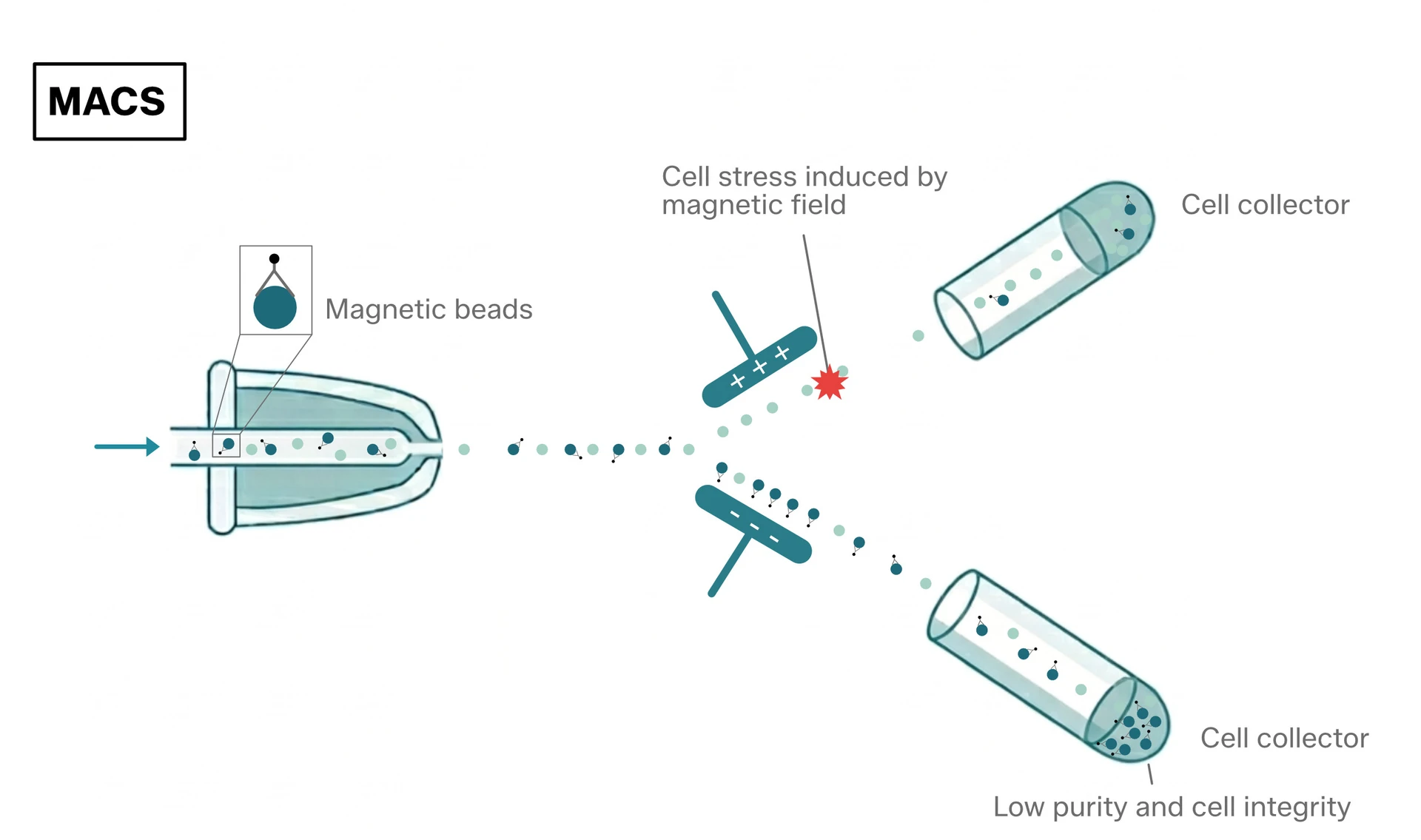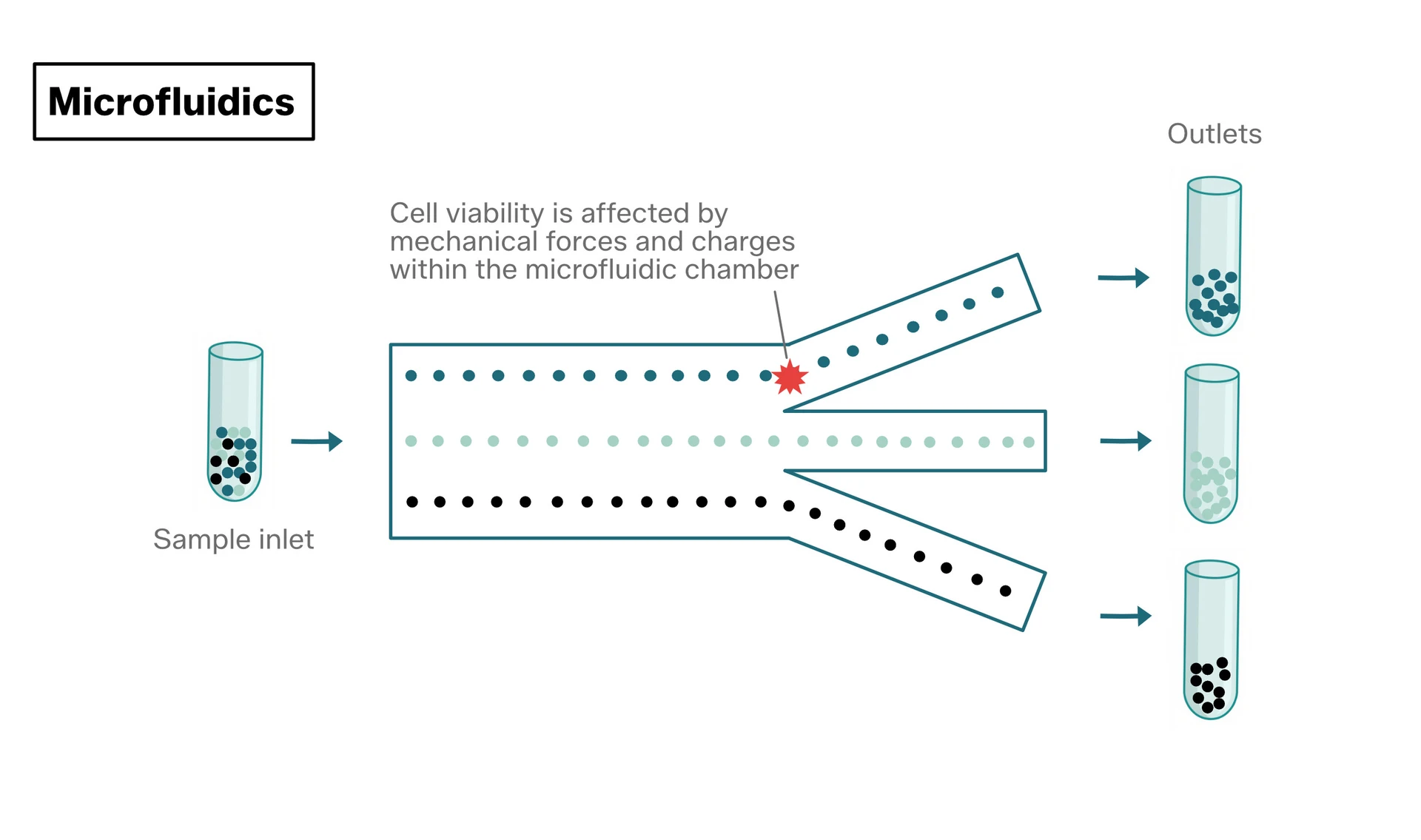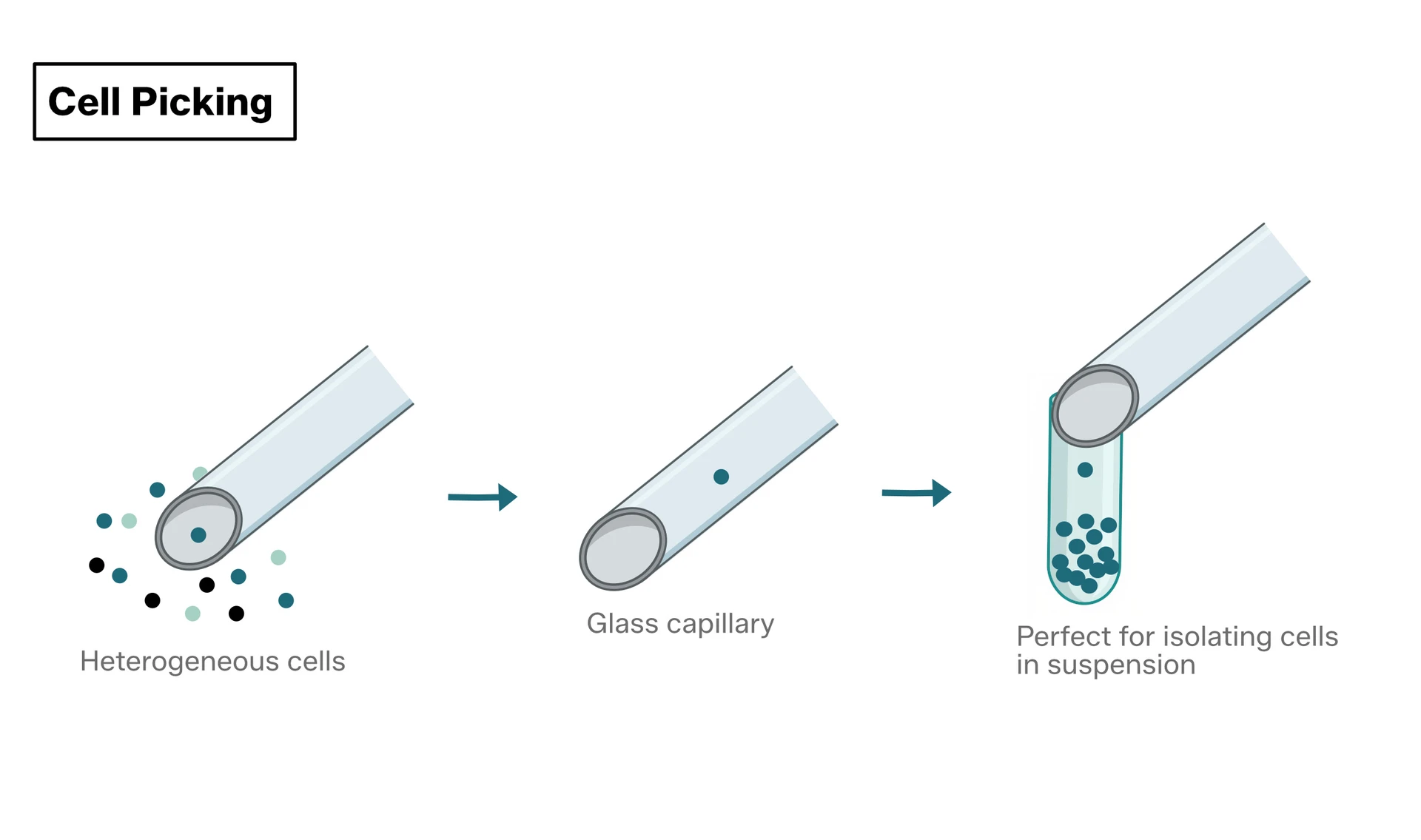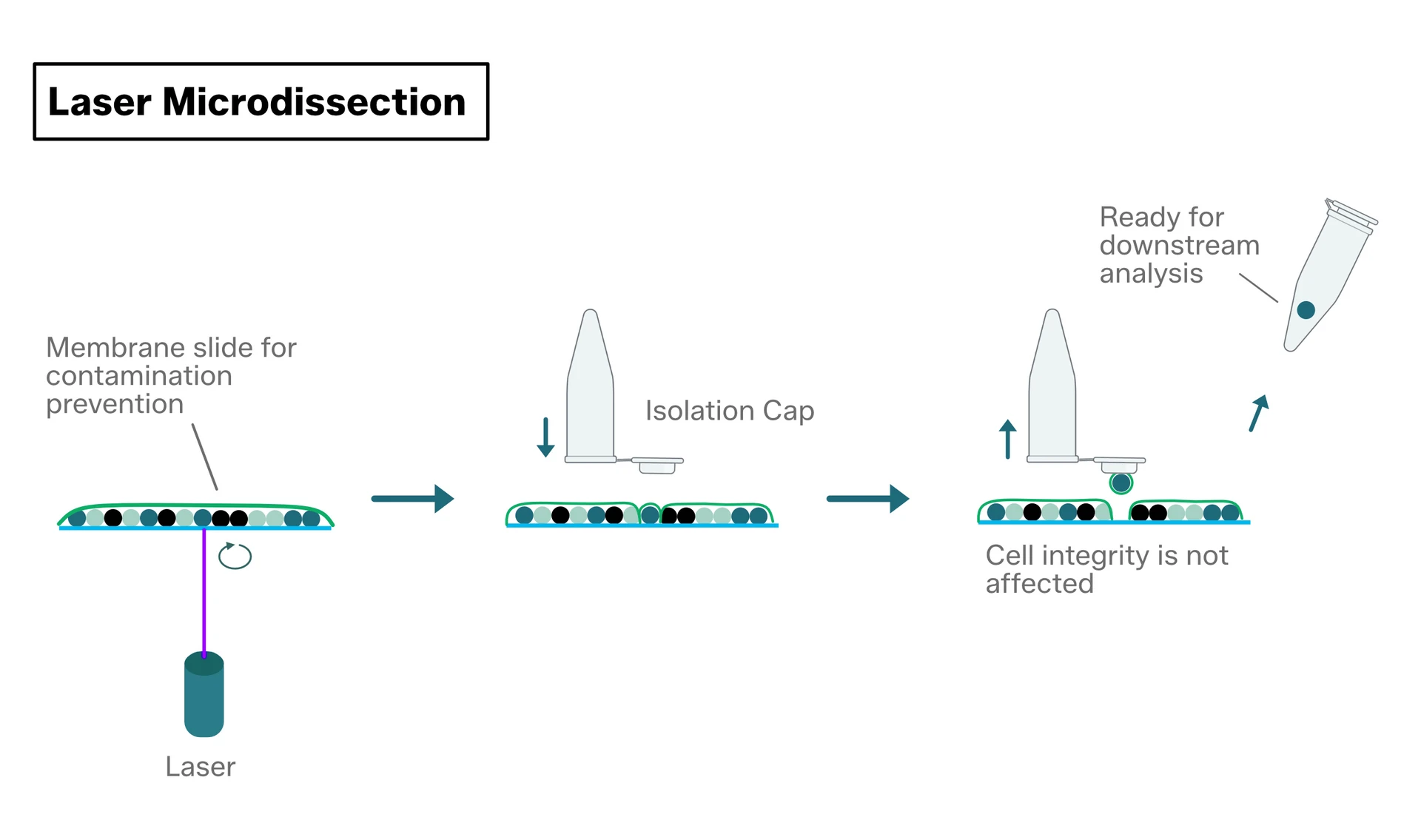

Fluorescence Activated Cell Sorting (FACS)
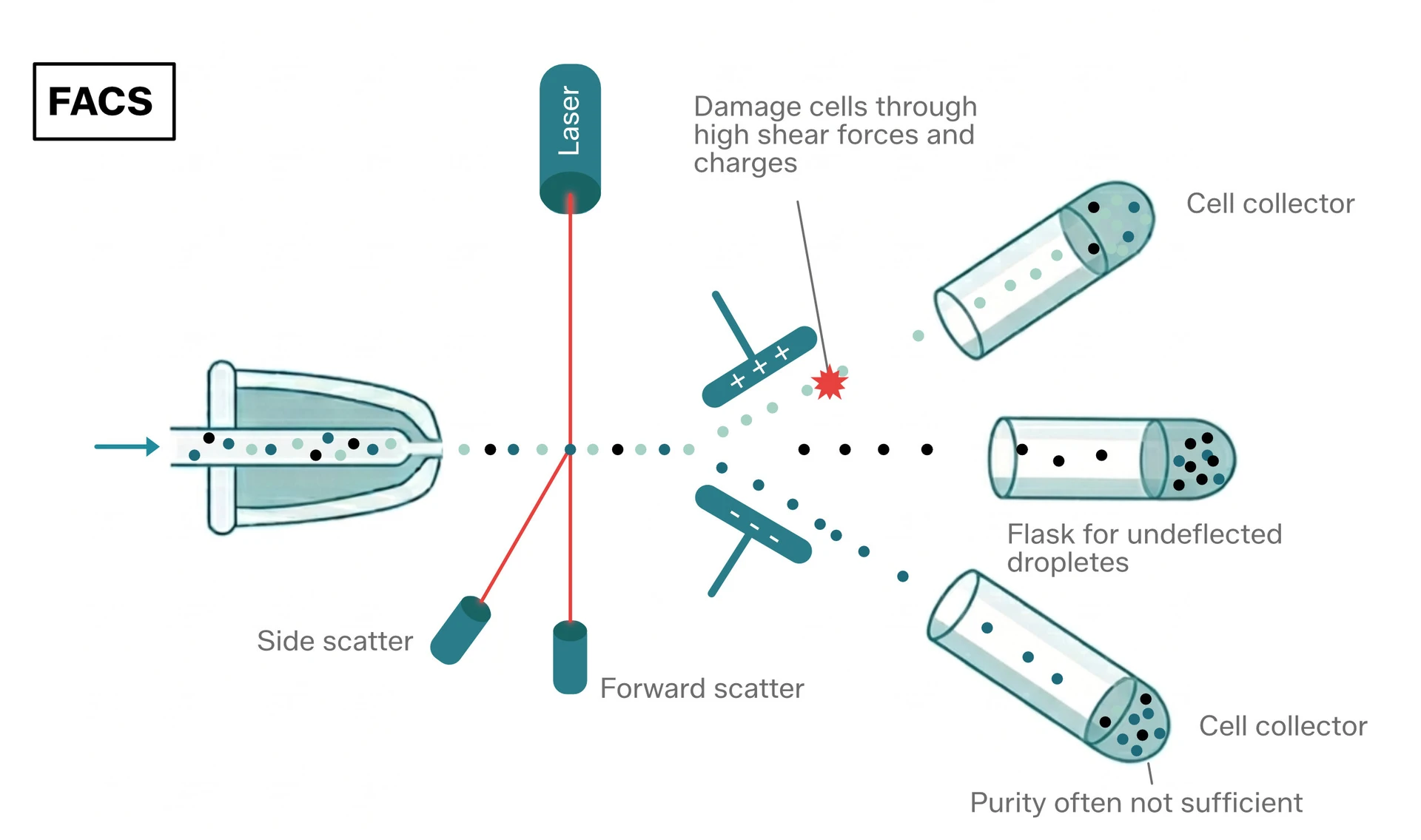
Efficient for high-throughput, marker-based cell isolation, but with several drawbacks. Sample preparation is labor-intensive and requires single-cell suspensions, which can be difficult for some tissues. The high flow rates and charging in FACS may reduce cell viability, affecting downstream analyses. Data interpretation is also complex, relying on accurate gating and compensation for spectral overlap. In addition, very rare cell populations with weak signals can be difficult to detect and isolate.